
Much Ado About Mulch
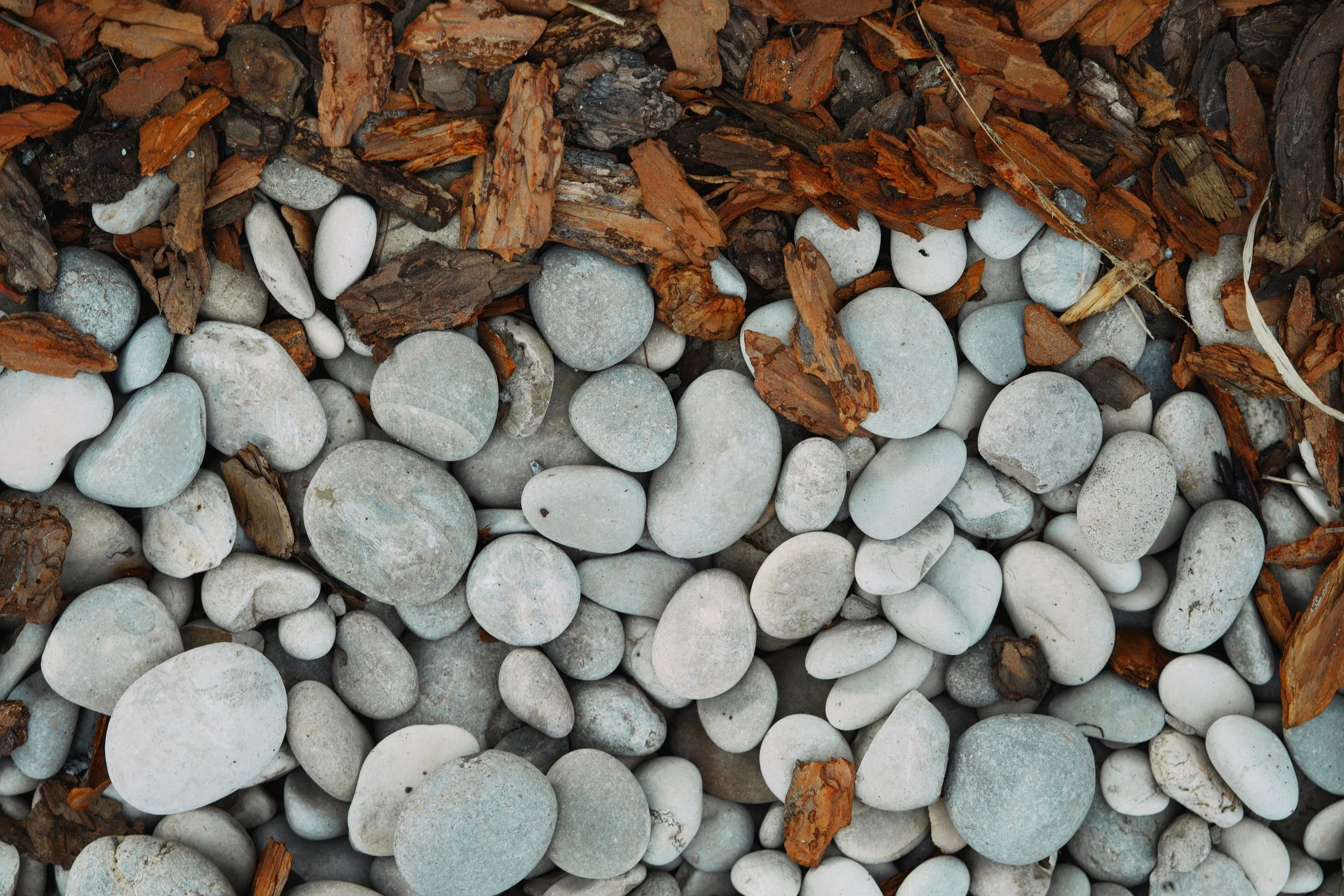
As an ecological landscaper, one of the first things my clients want to know is what type of mulch I will use in their installation. This seemingly innocuous question causes me to lose sleep on almost every project – not because mulch is a stressful topic in itself, but because so many people have an opinion about mulching materials without understanding the purpose behind the application. Each mulch option has its own pros and cons, but regardless, mulch is essential: It retains moisture in your soil, keeps soil temps cooler, prevents erosion, and suppresses weeds. The mulch you choose matters beyond the look of the finished product – it can impact your soil health and planting success.
Below, I outline a few common mulch options we encounter in the Sandhills and explain the pros and cons of each.
Pine Straw
Living in the Sandhills, pine straw seems like the inevitable choice for landscape applications. It is abundant and often free if you have stands of longleaf pines around your property. It’s reasonably attractive and creates a naturalistic look in landscaped spaces. But the aesthetic benefits are practically the only benefits of using pine straw.
Rather than increasing the organic content of soil, it forms mats of duff that build up over time, creating an anaerobic soil environment. It’s difficult for plants to thrive in these conditions, which can significantly change your soil’s chemistry. Further, pine straw is highly, highly flammable. The Sandhills are a fire-dependent ecosystem in which routine fire is essential to maintain forest health. When considered in combination with changing climatic patterns resulting in hotter, drier summers, mulching with pine straw on your property comes with increased liabilities.
And if soil health and flammability aren’t enough to dissuade you from selecting pine straw, its production results in longleaf pine monocultures, preventing understory species from growing. This is especially devastating in the Sandhills, where 90% of North Carolina’s plant biodiversity exists in the herbaceous plants, shrubs, and small trees that grow amidst our longleaf pines.
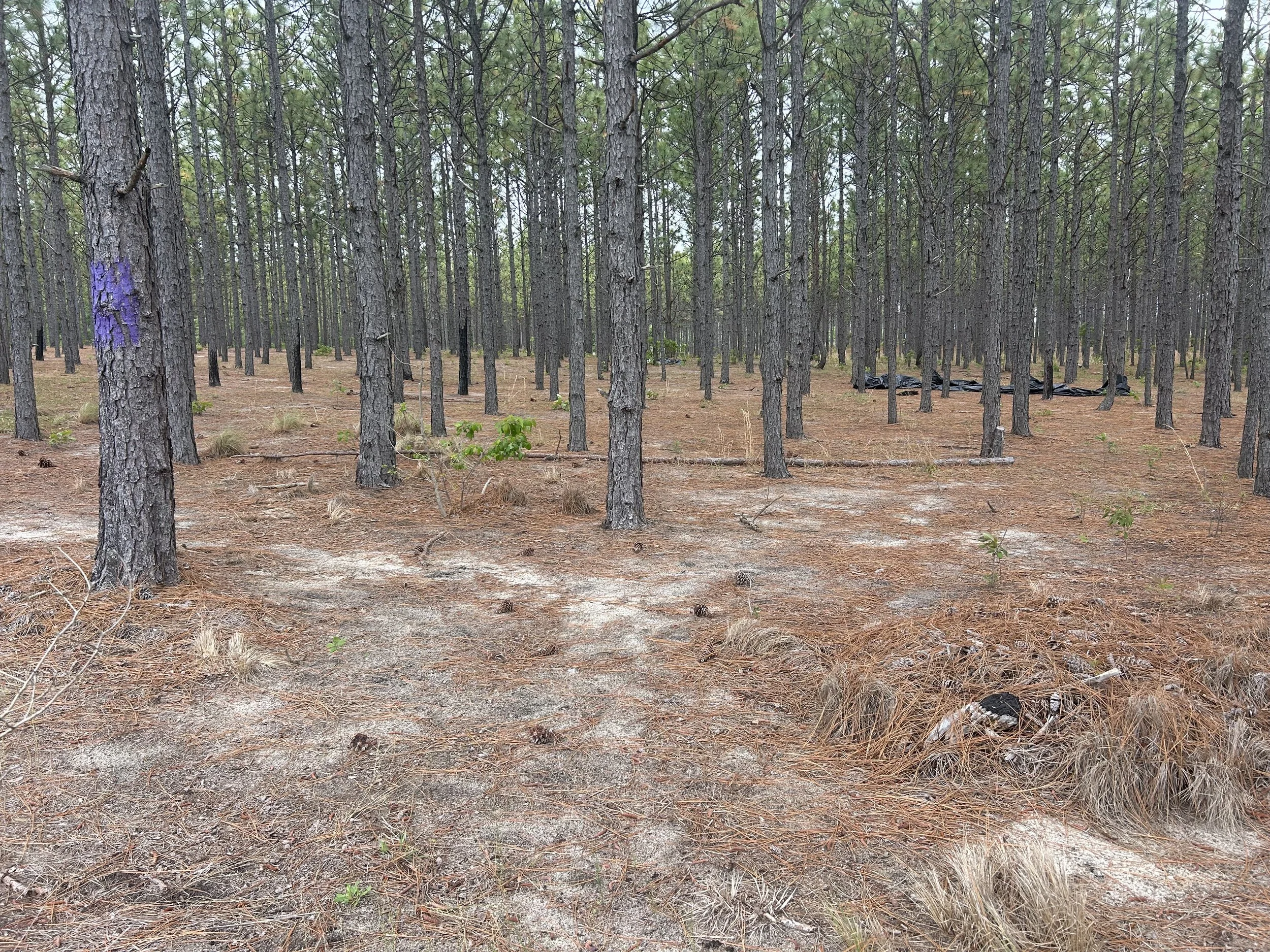
Pine Straw Production
Although pine straw production relies on the presence of longleaf pines, a keystone species in the Sandhills region, pine straw production creates monocultures.
Pine Bark Nuggets
Pine bark nuggets are the best option among wood-based mulches. Nuggets are a recycled forestry byproduct and add high-quality organic matter and natural acidity to soils that Southeastern native plants crave. When I started my design practice last year, it was my first-choice mulch, and when planting in clay and away from structures, it still is. But since delving into the ecology of the Sandhills, I’ve started to question whether this is the best choice for gardens on sandy soils.
Compared to clay, sand does a poor job of retaining water and nutrients. Sandhills-specific species often cannot and will not tolerate nutrient-rich soils loaded with organic matter, and generally need light and bare soil to germinate. Pine bark and wood mulch products create the opposite of these conditions, so depending on your project goals, it might be best to consider another mulch choice. Additionally, if you’re using a traditional mow-and-blow lawn/landscaping crew on your property, wood mulch can be displaced by leaf blowers. It also needs to be reapplied yearly as it breaks down into the soil.
Aggregates: Stone, gravel, and recycled concrete
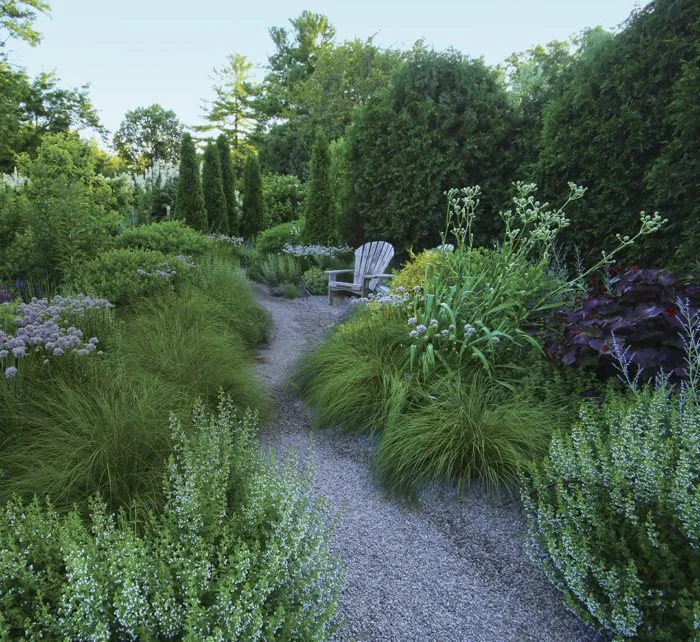
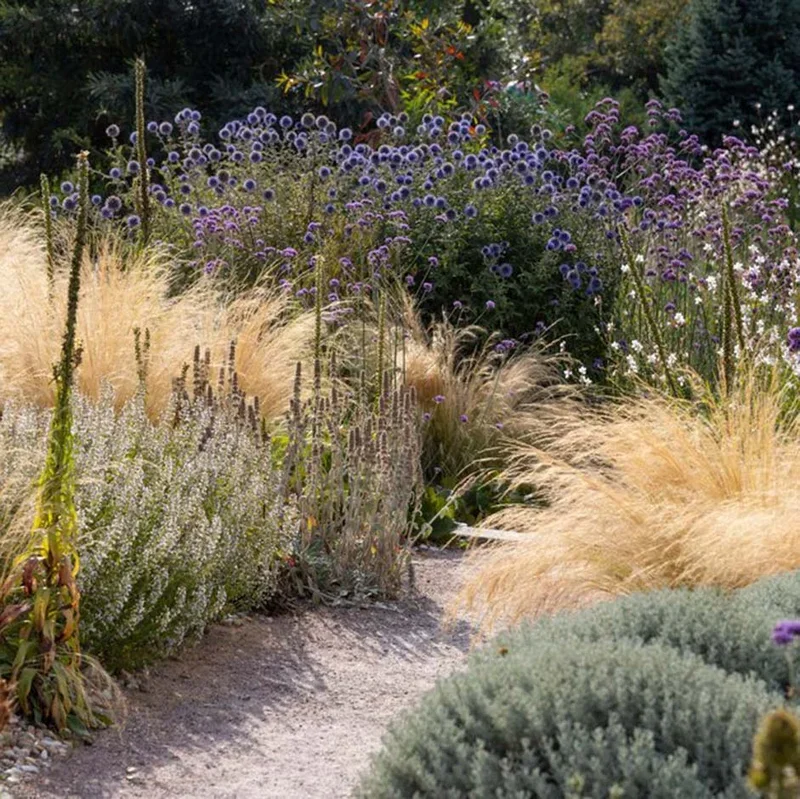
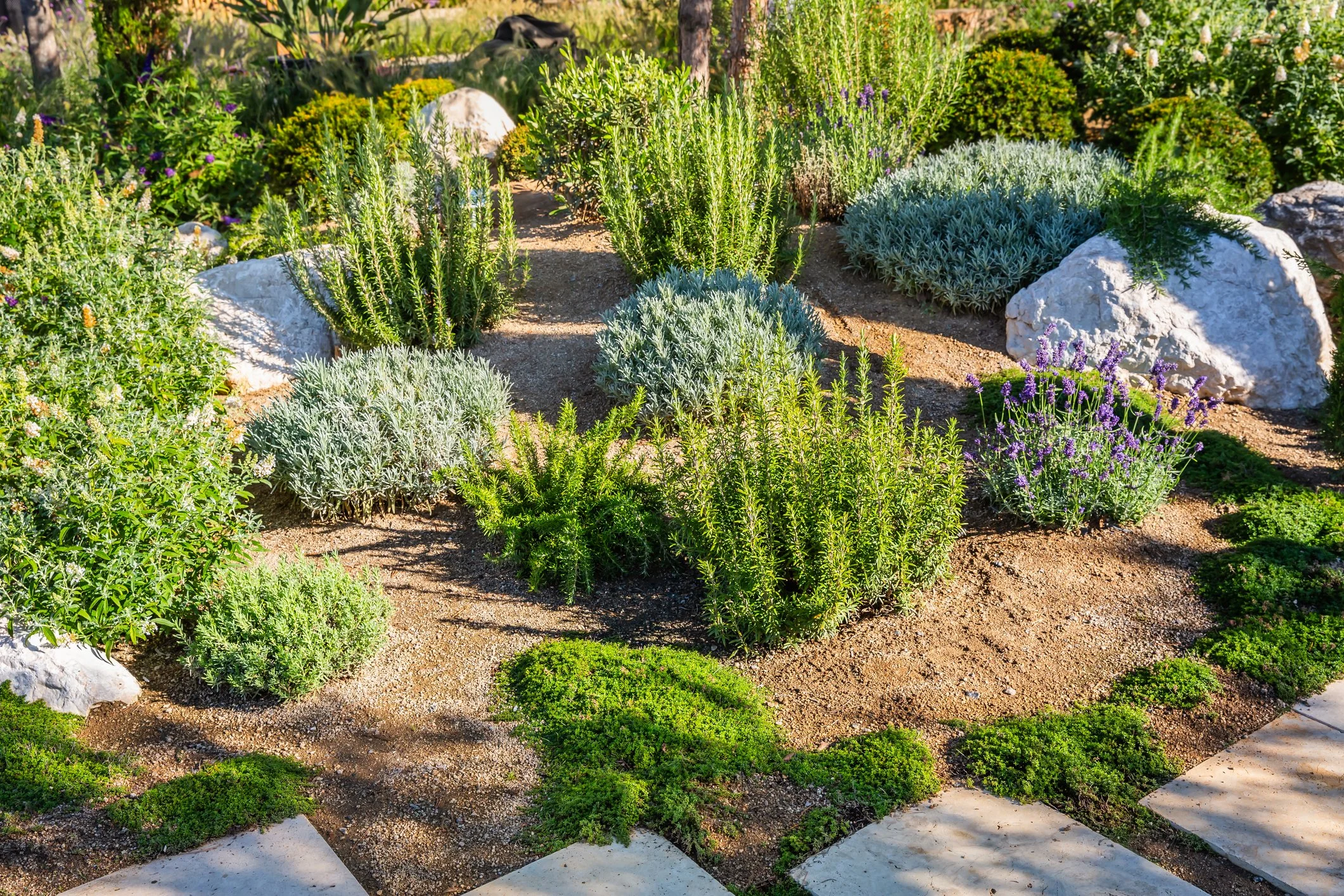
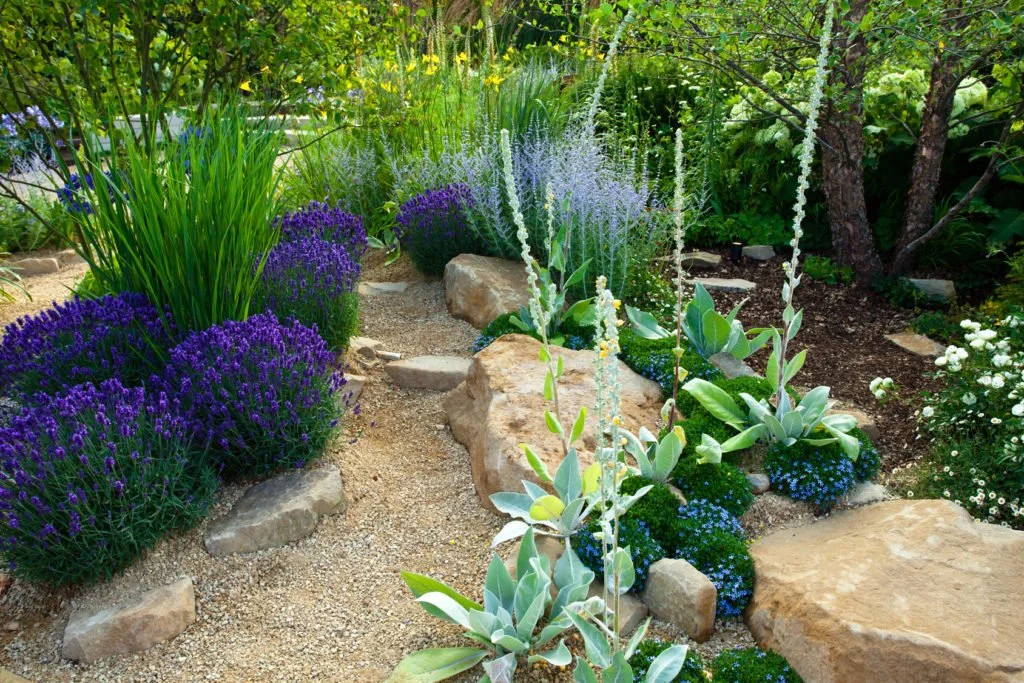
After deeper consideration, I realized that aggregates may be the perfect mulch for the Sandhills. Gravel, etc., offers weed suppression while retaining soil moisture, won’t blow away with repeated leaf-blowing, and can serve as a fire break around your home. Especially for large-scale projects, aggregates cost more initially. However, these products do not require continual replenishment after installation, resulting in year-over-year savings for clients.
Aggregate mulches still allow seeds exposure to light, meaning that desirable native plants can self-seed and naturalize in the garden. And from an aesthetic perspective, aggregate mulches are a more modern, practical choice. Crushed recycled concrete is affordable and creates an interesting contrast against the soft, organic forms of warm-season grasses and herbaceous wildflower species. Pea gravel is equally as beautiful in cottage gardens and French-country-inspired landscapes. Even decomposed granite can be used as a mulch/substrate into which plants can be directly installed.
Mulch material is an important choice that can impact your soil health and home safety. Before selecting a mulch, consider your soil type and landscape management practices already in place. For questions, design, and educational consultations, reach out to sandhillsnativeplants@gmail.com.